

Growth Regulators and Their Longevity
How Long Do Turfgrass Growth Regulators Last?
Turfgrass growth regulators (PGRs) are increasingly used by golf courses, sports turf managers, and lawn care professionals to improve turf quality while reducing mowing requirements.
One of the most common questions is: How long will a PGR application last?
The answer depends on the active ingredient, application rate, turf species, fertility program, and environmental conditions. Some PGRs, such as ethephon, are commonly used for shorter-term growth management and seedhead suppression, while others provide extended regulation and fewer applications throughout the season.
Benefits of PGR Programs
- Reduced mowing frequency
- Improved turf density and appearance
- Better clipping management
- Seedhead suppression
- Enhanced stress tolerance
- More consistent growth between service visits
For lawn care operators, PGRs can help maintain a cleaner, more manicured lawn between treatments. For turf managers, they can improve playing conditions while reducing labor demands.
The chart below compares the typical duration of growth regulation provided by several commonly used active ingredients, including ethephon, prohexadione-calcium, trinexapac-ethyl, paclobutrazol, and combination programs. Actual performance may vary based on turf species, application rate, temperature, fertility, and overall growing conditions.
Typical Turf PGR Longevity
Expected weeks of visible growth regulation under typical turf and lawn care conditions.
Paclobutrazol + Trinexapac-ethyl
Paclobutrazol
Trinexapac-ethyl
Prohexadione-Calcium
Ethephon
Actual performance may vary based on turf species, application rate, temperature, fertility, irrigation, mowing frequency, and overall growing conditions.
Products With Growth Regulators and Their Longevity
-
Paclo 2SC
TideActive Ingredient:Paclobutrazol: 22.3%Original price $210.00Original price $210.00 - Original price $210.00Original price $210.00Current price $189.79$189.79 - $189.79Current price $189.79in stockOriginal price $210.00Original price $210.00 - Original price $210.00Original price $210.00Current price $189.79$189.79 - $189.79Current price $189.79Sale -

Trin-Pac Select Plant Growth Regulator
Albaugh SpecialtyActive Ingredient:Trinexapac-Ethyl: 11.3%Original price $135.95 - Original price $315.95Original price$315.95$135.95 - $315.95Current price $315.95in stockOriginal price $135.95 - Original price $315.95Original price$315.95$135.95 - $315.95Current price $315.95 -

PROHEX 27.5 WDG Turf
RightLineActive Ingredient:Prohexadione Calcium: 27.5%Original price $396.00 - Original price $396.00Original price$396.00$396.00 - $396.00Current price $396.00in stockOriginal price $396.00 - Original price $396.00Original price$396.00$396.00 - $396.00Current price $396.00 -
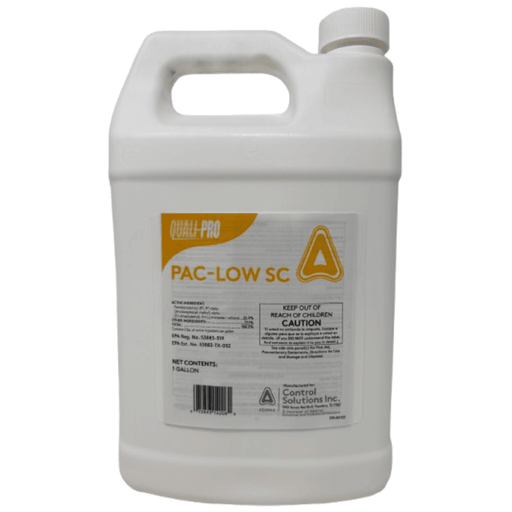
Pac-Low SC
Quali-ProActive Ingredient:Paclobutrazol: 22.9%Original price $229.99 - Original price $229.99Original price$229.99$229.99 - $229.99Current price $229.99in stockOriginal price $229.99 - Original price $229.99Original price$229.99$229.99 - $229.99Current price $229.99 -

Ethephon 2SL
Quali-ProActive Ingredient:Ethephon: 21.7%Original price $119.95 - Original price $119.95Original price$119.95$119.95 - $119.95Current price $119.95in stockOriginal price $119.95 - Original price $119.95Original price$119.95$119.95 - $119.95Current price $119.95


